


3 Rules for Secure Data Erasure in IT Asset Disposition (ITAD)
- support91296
- Jun 4
- 2 min read
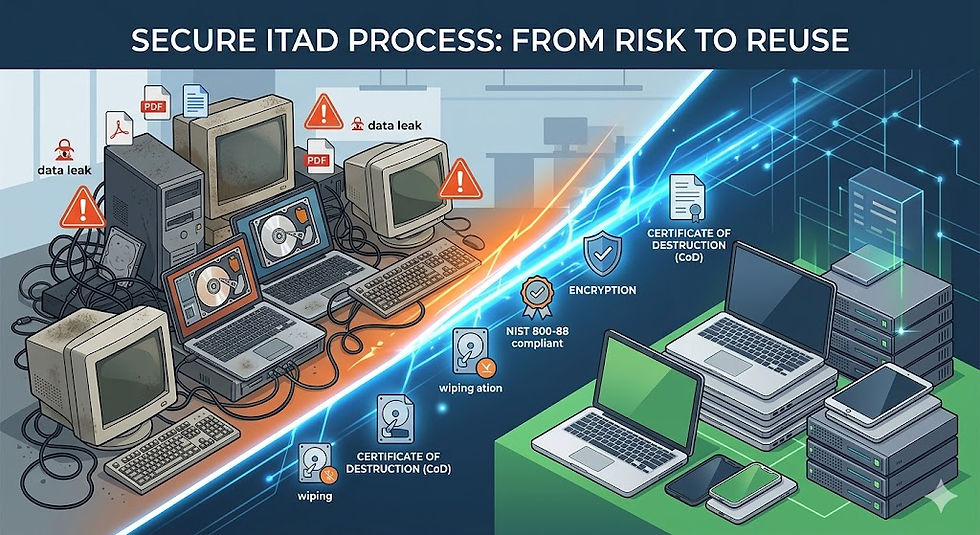
When decommissioning old corporate tech, clicking "delete" or performing a standard factory reset is not enough. These methods merely hide data; they do not erase it. To mitigate data breach risks and ensure compliance during the IT Asset Disposition (ITAD) process, your organization must transition from simple deletion to certified data sanitization.
To safely retire your hardware while maintaining a secure ITAD pipeline, follow these three essential rules:
1. Implement Certified Data Sanitization (NIST 800-88)
Do not rely on basic operating system tools. Your ITAD workflow should utilize software that adheres to recognized standards like NIST SP 800-88 (Guidelines for Media Sanitization) to completely overwrite storage media.
The SSD Exception: Modern laptops and smartphones use Solid State Drives (SSDs). Standard overwriting fails on flash memory; your ITAD process must utilize cryptographic erasure or firmware-level purging to ensure the data is unrecoverable.
2. Maintain a Strict Chain of Custody
Data liability doesn't end when a device is turned off. The highest risk of a data leak occurs while retired assets sit in storage waiting to be processed by your ITAD vendor.
Log every asset by its serial number the moment it is decommissioned to establish a clear audit trail.
Store retired hardware in a secure, access-controlled area until it is safely handed off to your ITAD partner.
3. Require a Certificate of Destruction (CoD)
Always partner with an ITAD vendor holding certified credentials (such as NAID AAA, R2v3, or e-Stewards) and demand a Certificate of Destruction. This legally binding document verifies the exact asset serial numbers, the sanitization method used, and the date of compliance. It serves as your primary defense during GDPR, HIPAA, or PCI-DSS audits.
🌍 ITAD Sustainability Tip: Prioritize software-based sanitization over physical destruction. Securely wiped drives allow assets to be refurbished and re-marketed—supporting a circular economy, reducing e-waste, and returning maximum value back to your IT budget. Only physically shred media if it is completely non-functional.



Comments